About
About Brandi
I became a therapist because I believe people deserve spaces where the complexity of their lives can be met with curiosity rather than judgment.
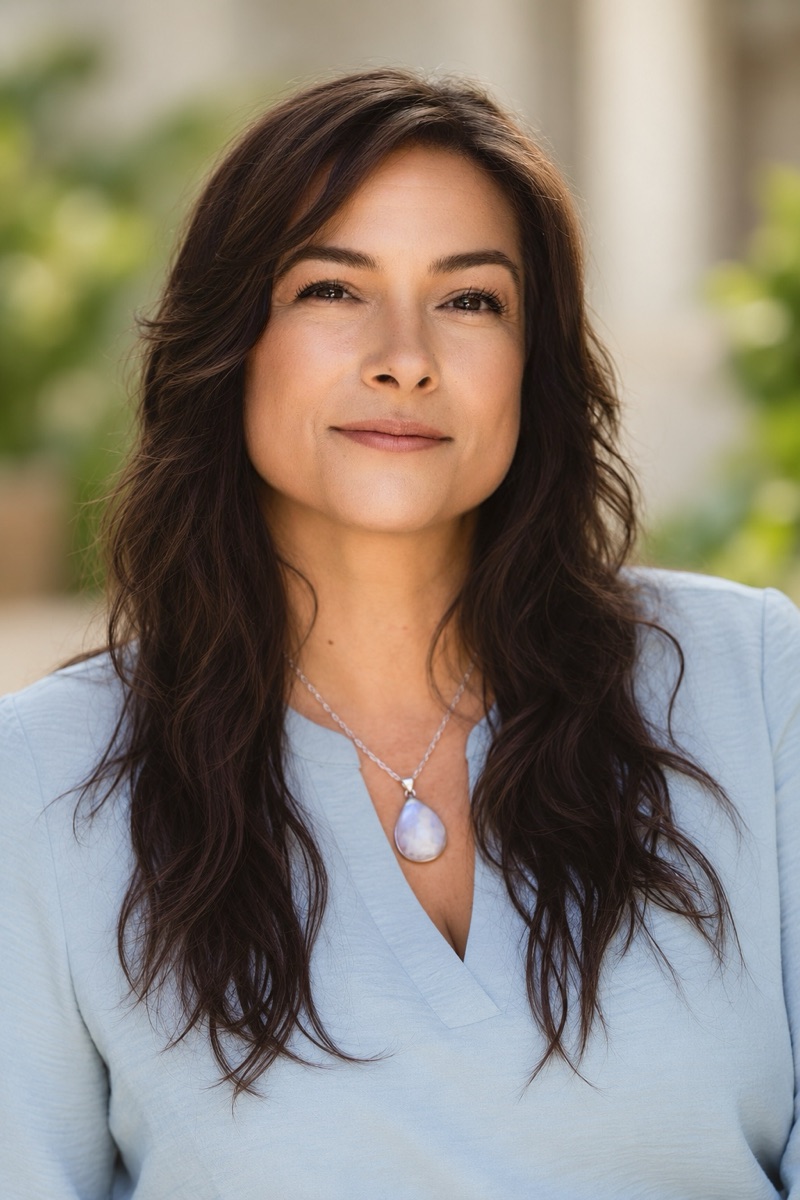
Many of us learn to adapt to difficult circumstances long before we have words for what is happening. We may become highly capable, independent, vigilant, accommodating, or emotionally self-contained. These strategies can help us survive, belong, or maintain important relationships. Over time, however, the same strategies may leave us feeling anxious, exhausted, disconnected, or unable to receive the care we readily offer to others.
I approach these patterns with respect. Rather than treating them as evidence that something is wrong with you, I am interested in understanding how they developed, what they have protected, and whether they are still serving the life you want to live.
My style is warm, engaged, thoughtful, and direct. I value emotional honesty, but I do not believe honesty needs to be harsh. I welcome humor, uncertainty, spirituality, anger, ambivalence, and the many contradictions that can exist within a person at the same time.
Registered Associate Marriage and Family Therapist #165076, Westlake Counseling Institute. Supervised by Patrick Lockwood, PsyD, Licensed Psychologist, PSY #29866.
How I Understand Therapy
I believe therapy is both a relationship and a process.
The quality of the relationship matters. Healing is supported when you feel sufficiently safe to be honest, curious, uncertain, and fully human. I work to create a relationship grounded in respect, consistency, collaboration, humility, and attention to the power dynamics that can exist in therapy.
The process also matters. Therapy can help us understand our stories, but it can also help us experience ourselves differently. This may happen through the discovery of a new boundary, the ability to remain present during a difficult emotion, a moment of compassion toward a younger part of yourself, or the experience of being seen without needing to perform.
These moments may appear small, but they can gradually reorganize how we relate to ourselves and others.
My Integrative Orientation
My work is informed by several complementary approaches.
Somatic Experiencing
Somatic Experiencing helps us understand trauma and stress through the language of the nervous system. It offers ways to work gently with physical sensations, survival responses, emotional activation, and the body's natural movement toward regulation.
Attachment-Informed Therapy
Attachment theory helps us explore how early and significant relationships may influence present-day expectations of closeness, conflict, abandonment, dependence, and safety. Attachment work is not about blaming caregivers. It is about recognizing the relational patterns we carry and creating opportunities for new experiences.
Experiential and Relational Therapy
Experiential therapy attends to what is happening in the present moment. We may notice an emotion, physical response, internal conflict, or interaction that is occurring during the session rather than only discussing it from a distance. Relational therapy also recognizes that meaningful patterns can emerge within the therapeutic relationship.
Psychodynamic and Depth-Oriented Therapy
Psychodynamic and depth approaches invite us to consider the unconscious patterns, earlier experiences, symbols, dreams, protective roles, and unresolved conflicts that may shape present concerns. This work can help illuminate not only why a pattern exists, but what meaning it has carried and what it may be asking of you now.
Person-Centered and Existential Foundations
I respect each person's capacity for growth and their right to define what a meaningful life looks like. Therapy may include questions related to identity, responsibility, freedom, isolation, belonging, loss, purpose, and the choices we make in response to circumstances we did not choose.
Cultural Humility and Identity
I strive to practice with cultural humility rather than assuming expertise in another person's lived experience. Your identities will not be treated as side notes to the therapeutic process.
Ready to take a first step?
A consultation is a brief conversation to see whether working together feels right. No forms, no commitment.